Kiribati's Historical Context: From Colonization to Independence
Introduction
Kiribati, an island nation located in the central Pacific Ocean, is made up of 33 atolls and reef islands stretching across an area of approximately 3.5 million square kilometers. Its unique geographical layout, spread across both the equator and the International Date Line, has shaped its history, culture, and interactions with the outside world. The historical journey of Kiribati from the times of early settlement through European colonization to eventual independence is a legacy to the resilience and adaptability of its people.
Early Settlement and Pre-colonial Society
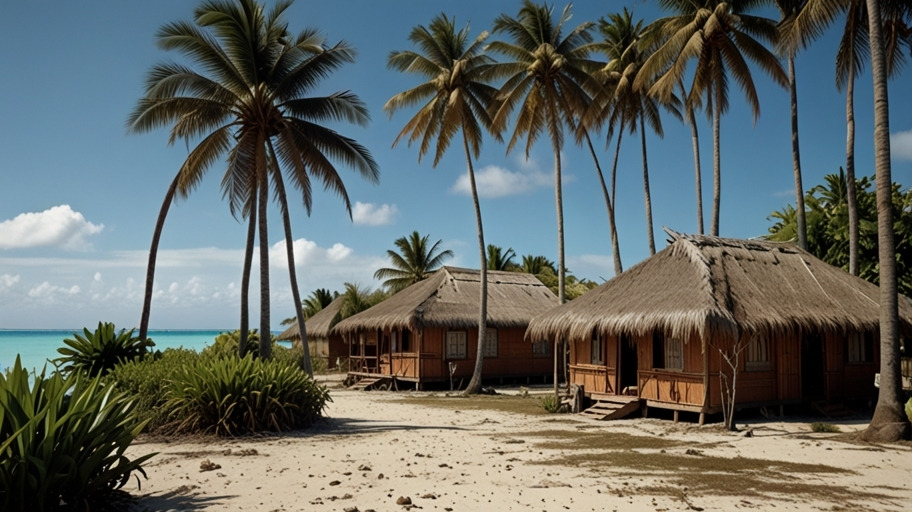
The islands of Kiribati were initially settled by Austronesian-speaking people around 3000 BC. Archaeological evidence suggests that early settlers navigated vast oceanic expanses using advanced seafaring skills, contributing to the formation of complex communities. The islands' isolation resulted in the development of a distinct culture, with social structures based on kinship, communal land ownership, and a reliance on the sea for sustenance.
In the traditional Kiribati society, each island functioned as an independent entity governed by chiefs or clan leaders. The community life was marked by a strict code of customs and traditions, including elaborate practices related to fishing, canoe building, and land tenure. These customs and societal structures were instrumental in maintaining order within the scattered and resource-limited atolls.
First European Contact
Kiribati first came into contact with Europeans in the early 19th century. The islands were initially visited by whalers, traders, and missionaries. Westerners were drawn to the region by its copra (dried coconut meat) and the lucrative possibilities of trade. The Gilbert Islands , the main group within what is now Kiribati, known to Europeans as a stopover for ships traversing the Pacific.
European influence gradually grew, and Christian missionaries, mainly from the London Missionary Society and the Catholic Church, arrived in the mid-19th century. They introduced Christianity, which slowly permeated traditional Kiribati culture. The missionaries' efforts, along with the introduction of Western education, started altering the social fabric, replacing many traditional beliefs with Christian doctrines.
The Era of Colonization
The increasing presence of European traders, along with the growing importance of the islands as a stopover in the Pacific, led to colonial interests in the region. In 1892, the British established a protectorate over the Gilbert Islands, along with the neighboring Ellice Islands ( now Tuvalu). The decision to create a protectorate was driven partly by the need to regulate trade, curb the abuses of labor recruiters (who often engaged in "blackbirding" or forced labor practices), and exert control over strategic maritime routes.
In 1916, the protectorate official became the Gilbert and Ellice Islands Colony under British administration. The British colonial government introduced Western-style governance, laws, and economic systems. This colonial structure involved centralized administration, land tenure reforms, and the establishment of a copra -based economy. However, these changes disrupted traditional societal structures and often led to conflicts over land and resource allocation.
The British established a limited infrastructure in the colony, focusing on basic services and economic development centered around copra production. Despite these changes, much of the island society remained rooted in traditional practices. The colonial administration did not deeply interfere in the everyday lives of the local people, allowing traditional customs to coexist with colonial governance.
Impact of World War II
Kiribati's history took a dramatic turn during World War II. In 1941, the Japanese Empire invaded the Gilbert Islands, recognizing their strategic importance in the Pacific theater. The Japanese occupation was marked by the construction of airfields and military installations, particularly on Betio Islet in Tarawa Atoll.
The Allied forces, mainly the United States, launched a campaign to retake the islands in 1943. The Battle of Tarawa was one of the most intense and bloody battles in the Pacific War, with significant casualties on both sides. The American victory in this battle was a turning point in the Pacific campaign and marked the beginning of the end of Japanese expansion in the region.
The aftermath of the war left lasting scars on Kiribati. Many islands bore remnants of military installations and war debris, and the experience of occupation and warfare contributed to a growing awareness among the I-Kiribati (the people of Kiribati) of global political dynamics and the implications of colonial rule.

Post-war Developments and the Push for Independence
After World War II, the Gilbert and Ellice Islands Colony experienced significant political and economic changes. The colonial administration began to invest in basic infrastructure, education, and health services, although in a limited capacity. The influence of Western education systems and the gradual introduction of democratic principles started to reshape political consciousness among the islanders.
The 1960s and 1970s were marked by growing movements for self-governance across the Pacific region. In the Gilbert and Ellice Islands, the push for independence was fueled by increasing dissatisfaction with colonial policies, especially those related to land rights, resource control, and economic opportunities. Additionally, the decolonization movement worldwide provided a powerful impetus for political change.
In 1974, tensions between the Gilbert and Ellice Islands grew due to cultural differences and divergent political aspirations. This led to a referendum, resulting in the separation of the two territories. The Ellice Islands became the independent nation of Tuvalu in 1978, while the Gilbert Islands continued on the path toward independence.
Towards Independence
The road to independence for the Gilbert Islands involved negotiations with the British government and the establishment of new political structures. A major step was the introduction of a representative government. In 1977, the Gilbert Islands achieved internal self-government, with the establishment of a legislative council and executive council that provided a framework for local governance.
On July 12, 1979, the Gilbert Islands officially declared independence from the United Kingdom, becoming the Republic of Kiribati. The new nation took its name from the local pronunciation of "Gilberts." The first President, Ieremia Tabai, took office as the head of the new government, symbolizing the transition from colonial rule to self-determination.
Post-independence Challenges
Independence marked the beginning of a new chapter for Kiribati, but it also came with significant challenges. The newly established republic faced issues related to economic development, social services, environmental sustainability, and the preservation of cultural identity.
- Economic Vulnerabilities : Kiribati's economy, heavily reliant on copra production, faced the constraints of limited natural resources, remoteness, and a lack of diversification. Fishing rights within Kiribati's vast Exclusive Economic Zone (EEZ) emerged as a crucial source of revenue. The government also established a trust fund to ensure economic stability, but dependence on foreign aid remained significant.
- Social Development : Post-independence, the government prioritized education, healthcare, and infrastructure development. However, challenges such as population growth, urbanization (especially in South Tarawa), and the provision of adequate public services strained the limited resources.
- Environmental Concerns : Kiribati's low-lying atolls make it particularly vulnerable to the impacts of climate change, including sea-level rise and extreme weather events. Protecting the islands and ensuring the survival of future generations became central to the national agenda. International advocacy on climate change and environmental protection became a prominent aspect of Kiribati's foreign policy.
- Cultural Preservation : In the face of modernization and globalization, preserving Kiribati's unique culture and traditional practices became an important priority. Efforts to maintain language, customs, and communal lifestyles while integrating aspects of modernity shaped national policies and educational curricula.
Kiribati in the Modern Era
Since achieving independence, Kiribati has navigated its unique path in the global community. The country has worked to balance traditional values with modern statehood, advocating for issues relevant to its circumstances, such as climate change, maritime security, and sustainable development.
In international relations, Kiribati has joined regional and global organizations, including the Pacific Islands Forum and the United Nations. The country's leadership has been active in raising awareness about the existential threats posed by climate change, highlighting the plight of small island nations in international negotiations .
Conclusion
The historical trajectory of Kiribati from its early Austronesian settlers through European colonization to eventual independence illustrates a story of adaptation, resilience, and determination. Despite the disruptions and challenges brought by colonization, war, and global changes, Kiribati has managed to preserve its cultural identity and navigate the complexities of modern nationhood.
The challenges faced post-independence, especially economic and environmental vulnerabilities, underscore the ongoing struggle for sustainable development and climate resilience. Kiribati's history serves as both a record of its past struggles and achievements and a roadmap for its ongoing journey as a small but determined player on the world stage.