Kiribati's Digital Transformation and Its Impacts on Society
In the heart of the Pacific Ocean lies Kiribati, a remote island nation comprising 33 atolls and reef islands scattered over 3.5 million square kilometers. With its isolation, limited infrastructure, and vulnerability to climate change, Kiribati faces numerous challenges in achieving sustainable development. However , in recent years, digital transformation has emerged as a crucial strategy to address these challenges and propel Kiribati toward a more connected, efficient, and resilient future. This article explores the ongoing digital transformation in Kiribati, its societal impacts, and the hurdles that remain on the path to digital inclusion.
1. Kiribati's Digital Transformation: An Overview
Digital transformation in Kiribati represents a multi-faced endeavor that encompasses advancements in information and communication technology (ICT), e-governance, digital economy, and improved access to digital services for the public. The government of Kiribati has recognized the potential of digital technologies to overcome geographical barriers, enhance public services, boost economic growth, and improve the overall quality of life for its citizens.

A. The ICT Infrastructure and Connectivity Challenge
One of the primary challenges for digital transformation in Kiribati has been the lack of robust ICT infrastructure. Given Kiribati's scattered geography, building a reliable telecommunications network is both costly and logistically complex. Historically, Kiribati's telecommunication infrastructure relied on limited satellite connections and expensive mobile networks with limited coverage, resulting in slow internet speeds and high costs for consumers.
In response to these challenges, the government of Kiribati, with support from international organizations such as the World Bank and the Asian Development Bank (ADB), has been working to improve connectivity. A notable initiative is the installation of undersea fiber-optic cables to improve internet access. The East Micronesia Cable Project, for instance, aims to connect Kiribati with the global digital network, promising a transformative impact on internet speed, reliability, and affordability.
B. Government Initiatives for Digital Development
To propel digital transformation, the government of Kiribati has taken significant steps toward creating a conducive environment for digital growth. The establishment of the Kiribati National ICT Policy aims to guide the country's digital development efforts, focusing on enhancing infrastructure, promoting digital literacy, and fostering a digital economy. This policy outlines a roadmap for developing e-government services, improving telecommunications networks, and ensuring that ICT development aligns with national socio-economic goals.
The government has also been exploring partnerships with private sector entities and international aid agencies to facilitate investment in digital infrastructure, develop public-private partnerships (PPPs), and encourage the use of digital platforms for business and education. Digital literacy programs have been launched to ensure that the population is equipped to utilize new technologies, promoting inclusivity in the digital age.
2. The Impact of Digital Transformation on Society
Digital transformation is reshaping various aspects of society in Kiribati, from government services and economic activities to education and healthcare. This transformation, while still in its early stages, is gradually improving the quality of life for the people of Kiribati and addressing some of the unique challenges posed by the country's remote and dispersed geography.
A. Enhancing Government Services through E-Governance
One of the most significant impacts of digital transformation in Kiribati is the development of e-governance. E-governance involves the use of digital platforms to deliver government services, streamline administrative processes, and facilitate interaction between citizens and the government. In a country like Kiribati, where the population is spread across numerous islands, e-governance can dramatically improve accessibility to public services.
The Kiribati government has begun implementing digital systems for various administrative functions, such as issuing official documents, processing licenses, and managing social welfare programs. The adoption of e-governance has reduced the need for physical travel to government offices, saving time and resources for both citizens and government employees. Additionally, digital platforms have enabled more transparent and efficient public service delivery, reducing instances of bureaucratic delays and corruption.
The digital transformation of government services has also extended to the election process. The introduction of electronic voter registration and the use of digital platforms for information dissemination during elections have enhanced civic participation and ensured smoother, more accessible election procedures. By making government services more accessible and efficient, digital transformation is fostering a more inclusive and participatory society in Kiribati.
B. Promoting Economic Growth and Digital Entrepreneurship
Kiribati's economy has traditionally been reliant on fishing, agriculture, and remittances. However, digital transformation is opening new avenues for economic growth and diversification. Improved internet connectivity and digital infrastructure are enabling businesses to access broader markets, streamline operations, and adopt e-commerce practices.
Small and medium-sized enterprises (SMEs) in Kiribati are beginning to leverage digital tools to expand their market reach beyond local communities. Online marketplaces and social media platforms provide businesses with opportunities to promote products, connect with customers, and conduct transactions without the constraints of physical geography. The development of mobile banking and digital payment systems has further facilitated e-commerce activities, allowing businesses and consumers to engage in cashless transactions with greater ease and security.

Furthermore, digital transformation is fostering the growth of a nascent digital entrepreneurship ecosystem in Kiribati. Youths and aspiring entrepreneurs are exploring opportunities in the digital economy, from software development and digital marketing to online content creation. To support this entrepreneurial spirit, the government and non -governmental organizations are offering training programs, workshops, and mentorship initiatives aimed at building digital skills and promoting innovation.
C. Transforming Education and Learning
Education in Kiribati has long been hampered by geographical isolation, limited access to resources, and a shortage of qualified teachers. Digital transformation is playing a crucial role in overcoming these obstacles by expanding access to educational materials, enhancing teaching methods, and promoting remote learning.
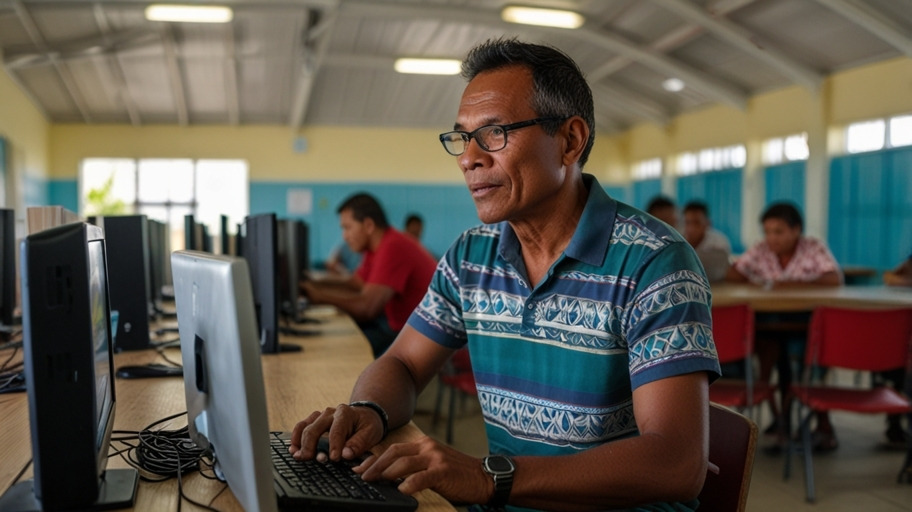
The introduction of digital technologies in schools, including computers, tablets, and internet connectivity, has allowed students to access a wealth of online educational resources. Teachers are utilizing digital tools to enhance their lesson plans, incorporate multimedia content, and facilitate interactive learning experiences. Additionally, online platforms are providing opportunities for teacher training and professional development, helping to address the shortage of skilled educators in the country.
Remote learning has become particularly significant in Kiribati, where students on outer islands often face difficulties in attending traditional schools. The use of digital platforms for distance education enables students to participate in virtual classrooms, access educational content, and communicate with teachers and peers regardless of their location. This has been especially critical during the COVID-19 pandemic, which disrupted in-person education and underscored the importance of digital learning solutions.
D. Improving Healthcare and Public Health Services
Digital transformation is also making strides in the healthcare sector in Kiribati, enhancing the delivery of medical services and public health initiatives. The country has faced challenges in providing healthcare to its dispersed population due to limited healthcare facilities and personnel. Digital health solutions are helping to bridge these gaps, improving both access to and the quality of healthcare services.
Telemedicine has emerged as a vital tool for providing medical consultations and diagnostic services to people living on remote islands. Through telemedicine platforms, patients can connect with healthcare professionals for consultations, receive medical advice, and access follow-up care without the need for extensive travel . This has been particularly beneficial for managing non-communicable diseases (NCDs) and providing prenatal care in rural areas.
Furthermore, digital health platforms are aiding public health efforts by enabling better data collection, disease surveillance, and health information dissemination. Health authorities can use digital tools to track outbreaks, monitor public health trends, and implement targeted health interventions. The use of mobile applications for health education and campaigns awareness is also empowering citizens to take charge of their health and adopt healthier lifestyles.
3. Challenges and Opportunities in Kiribati's Digital Future
Despite the progress made in Kiribati's digital transformation, several challenges persist that must be addressed to ensure the inclusive and sustainable development of the nation's digital society.
A. Addressing the Digital Divide
While digital transformation promises numerous benefits, there is a risk of exacerbating the digital divide between urban and rural communities, as well as between different socio-economic groups. Internet access in Kiribati remains uneven, with rural and outer islands facing greater connectivity challenges and higher bridge costs. To this digital divide, investments in telecommunications infrastructure, including expanding the reach of fiber-optic networks and improving mobile coverage, are crucial.
Moreover, promoting digital literacy is essential to ensure that all citizens can participate in the digital economy and access digital services. Tailored digital education programs targeting women, youth, and marginalized groups can help reduce inequalities and foster a more inclusive digital society.
B.Ensuring Cybersecurity and Data Privacy
As Kiribati's digital landscape expands, cybersecurity and data privacy have become critical concerns. The increased use of digital platforms for government services, financial transactions, and personal communication raises the risk of cyberattacks, data breaches, and identity theft. The government must implement robust cybersecurity measures, establish data protection regulations, and raise public awareness about online safety to safeguard citizens' privacy and security.
C. Leveraging International Partnerships and Aid
International collaboration and aid will continue to play a pivotal role in Kiribati's digital transformation journey. Partnerships with organizations such as the World Bank, ADB, and the International Telecommunication Union (ITU) can provide technical expertise, funding, and capacity-building support. Regional cooperation with neighboring Pacific nations can facilitate knowledge exchange and collaborative efforts to address shared digital challenges, such as connectivity and cyber threats.
Conclusion
Kiribati's digital transformation is reshaping society by enhancing government services, boosting economic growth, transforming education, and improving healthcare. The adoption of digital technologies is helping the nation overcome geographical barriers, improve public service delivery, and promote inclusive development. However, the journey toward a fully digital society is not without challenges, including infrastructure limitations, the digital divide, and cybersecurity concerns.
As Kiribati continues to navigate its digital future, a comprehensive approach that emphasizes digital infrastructure investment, digital literacy, cybersecurity, and international collaboration will be crucial. By addressing these challenges, Kiribati can harness the full potential of digital transformation to create a more connected, prosperous, and resilient society for its people.